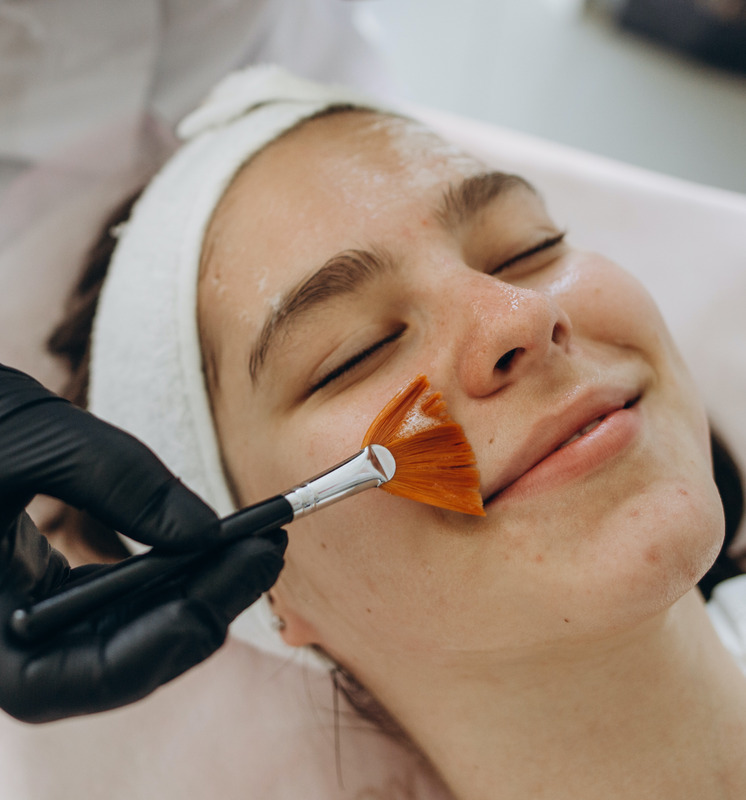
A customized chemical peel at Dr. Kaga’s NJ practice can resurface dull or damaged skin, improve uneven pigmentation, and reveal a smoother, brighter complexion. At TKI, peel strength and treatment approach are selected based on your skin type, specific concerns, previous treatments, and how much downtime you’re comfortable with.
For patients who want skin rejuvenation without a peel, or additional hydration and recovery support, TKI also offers professional facial mask treatments including CO2Lift®.
Why choose chemical peels?
Chemical peels are skin resurfacing treatments that use a carefully selected solution to remove damaged outer layers of skin and encourage healthy skin renewal. Depending on the type and strength of the peel, treatment can range from gentle exfoliation with little downtime to more intensive resurfacing for more significant concerns.
Rather than taking a one-peel-fits-all approach, your TKI provider will evaluate your skin and recommend an appropriate treatment based on what you’re trying to improve.
What can chemical peels treat?
Chemical peels in NJ can be customized to address a variety of common skin concerns, including:
- Dark spots and uneven pigmentation
- Sun damage
- Post-inflammatory hyperpigmentation
- Acne and acne-related discoloration
- Dull or rough skin
- Uneven skin tone and texture
- Superficial fine lines
- Certain superficial scars
- Overall skin clarity and brightness
Not every peel is appropriate for every skin type or concern. Patients prone to pigmentation changes, with sensitive skin, or with conditions such as rosacea may require a particularly careful treatment approach.
Light, medium & deeper chemical peels
Chemical peels are generally categorized according to how deeply they affect the skin.
Light or “Lunchtime” Peels
Light peels provide superficial exfoliation and are commonly used to refresh dull skin, improve mild discoloration, smooth texture, and help keep pores clear.
They generally involve relatively little downtime and can often be performed as a series for progressive improvement.
Deeper Resurfacing
Patients with more significant sun damage, wrinkles, pigmentation, or textural changes may need a more intensive resurfacing approach.
A deeper treatment isn’t automatically better. More aggressive resurfacing also carries greater downtime and risk, so Dr. Kaga and the TKI team can help determine whether a chemical peel or another resurfacing technology available at the practice is the more appropriate option.
Medium-Depth Peels
Medium-depth peels penetrate further into the skin and may be considered for more noticeable pigmentation, sun damage, fine lines, or textural concerns.
Because treatment is more intensive, patients should expect more visible peeling and a longer recovery period than with a superficial peel.
What happens during a chemical peel?
Your skin is first cleansed and prepared for treatment. A selected chemical solution is then carefully applied to the treatment area.
You may experience warmth, tingling, or stinging while the peel is active. The intensity and length of treatment depend on the formulation and depth of the peel.
Following treatment, your skin may appear red or feel sensitive. Depending on the peel used, flaking or visible peeling may develop over the following days as the skin renews itself.
How should I prepare for a chemical peel?
Preparation depends on the type of peel and your current skincare routine.
You may be asked to temporarily discontinue retinoids, exfoliating acids, or other potentially irritating products before treatment. It’s also important to avoid excessive sun exposure and tanning around the time of your peel.
Tell your provider about medications, recent aesthetic procedures, active skin conditions, or a history of cold sores before treatment so your treatment can be planned appropriately.
When will I see results?
Your results and recovery depend heavily on the depth of the peel. With lighter peels, skin may look smoother and brighter relatively quickly, while a series of treatments may be recommended for concerns such as pigmentation, acne, or uneven texture. More intensive peels generally involve greater peeling and downtime, with improvements developing as the skin heals and renews.
Our provider will recommend a treatment schedule based on your skin and goals rather than automatically repeating peels at a fixed interval.
CO2Lift® facial mask
For patients interested in a treatment that doesn’t require traditional chemical exfoliation, TKI also offers CO2Lift®. CO2Lift is a professional carboxytherapy treatment designed to support skin hydration and overall skin quality. It can be used as a stand-alone facial mask or incorporated into a broader aesthetic treatment plan when appropriate. It may be a good option for patients looking for refreshed, hydrated skin without the peeling associated with a chemical peel.
Chemical peel or facial mask: which is right for me?
The right treatment depends on what you’re trying to accomplish. A skin peel may be more appropriate when the primary goal is exfoliation, pigmentation improvement, acne-related concerns, or resurfacing. A professional facial mask such as CO2Lift may be selected when hydration, skin quality, or a gentler rejuvenation treatment is the priority.
For some patients, these treatments may also complement other aesthetic procedures available at TKI.
Schedule chemical peels in Marlboro or East Brunswick
If you’re struggling with hyperpigmentation, fine lines and wrinkles, uneven texture, acne-related discoloration, or other skin imperfections, a customized chemical peel may be right for you.
Our team at The Kaga Institute can evaluate your skin and recommend the appropriate peel or alternative treatment based on your concerns and goals. Schedule your consultation in Marlboro or East Brunswick, New Jersey, by filling out our online appointment request form or calling 848-8-DRKAGA (848-837-5242).